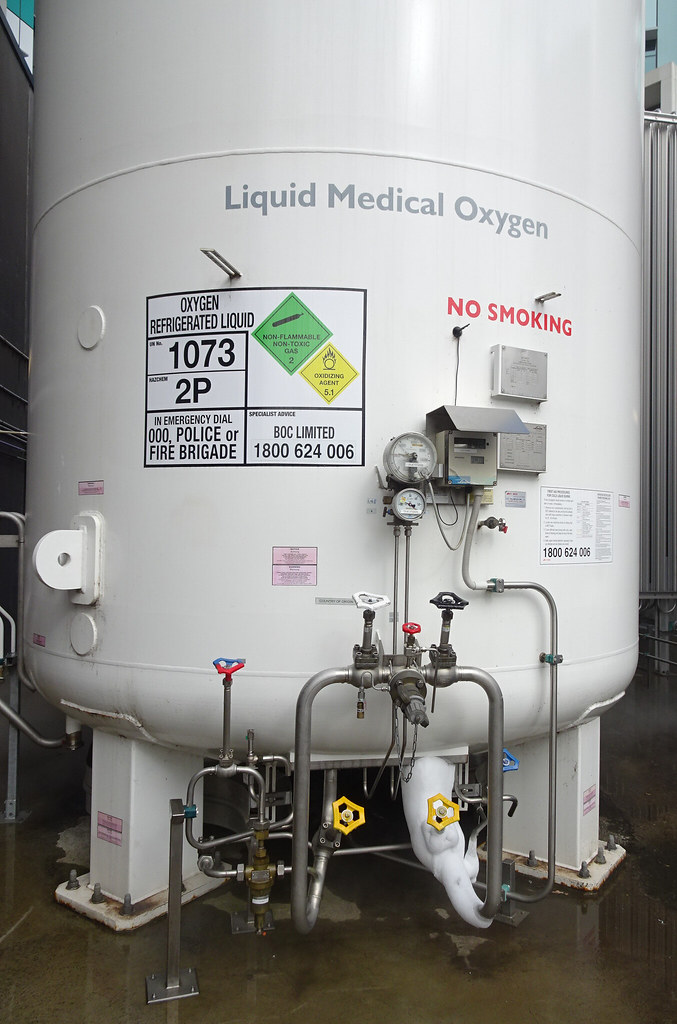
Medical Oxygen Safety During COVID-19 Pandemic
The Importance of Medical Oxygen
Medical oxygen plays a critical role in delivering patient care during the COVID-19 pandemic. Certain therapies require large amounts of oxygen or its use in areas of healthcare facilities not designed for oxygen, resulting in oxygen-enriched atmospheres with over 23.5% oxygen. Although oxygen itself does not burn, ignition sources such as open flames, heated surgical equipment, and electrical equipment readily ignite materials in oxygen-enriched atmospheres. To avoid incidents involving oxygen and associated equipment, it is essential for healthcare personnel handling and using these gases to understand the risks and mitigation practices involved.
Healthcare Facility Oxygen Fire Safety
The Compressed Gas Association (CGA) provides a poster that outlines basic safety information for healthcare environments that use medical oxygen. The poster describes critical steps that healthcare facilities can take to reduce the risk of medical oxygen fires. It is vital to note that the poster is not a substitute for reading and following codes and regulations, industry standards, and supplier instructions. The poster is available as a free safety resource to all.
Three Critical Steps to Support Medical Oxygen Supply Chain
CGA has also published two posters that communicate three critical steps to support the medical oxygen supply chain during the COVID-19 pandemic. Medical oxygen suppliers can share these posters with healthcare customers to ensure safe handling and use of medical oxygen. The posters are designed so that suppliers can add their contact information to each poster before sharing it with health care customers. Health care professionals can also download these posters for free.
CGA M-24: Standard for Mitigating Oxygen Hazards in the Health Care Environment
The CGA has published CGA M-24, Standard for Mitigating Oxygen Hazards in the Health Care Environment (formerly SB-31), which outlines general requirements for personnel handling and using oxygen and oxygen-rich gases and associated equipment in health care environments. This CGA safety publication is available free of charge to all those who may need it to help ensure that all healthcare facilities and their employees have access to the necessary information to facilitate a safe response to the COVID-19 pandemic.
Product Information: Oxygen
Oxygen is a colorless, odorless, tasteless elemental gas that supports life and combustion. It constitutes about one-fifth of the atmosphere (20.95% by volume and 23.2% by weight) and is nonflammable. However, all materials that are flammable in air burn much more vigorously in oxygen. General precautions for safe handling of gaseous oxygen are contained in CGA G-4, Oxygen, and precautions for handling compressed gases in containers are found in CGA P-1, Safe Handling of Compressed Gases in Containers. Hydrocarbons like oils and greases must be kept away from oxygen, and sources of ignition should be eliminated to the extent possible.
Other Precautions and Risks
When pure oxygen treatment is used to correct hypoxia, the minimum concentration of oxygen that will overcome the hypoxia should be used and continued only as necessary. Oxygen treatment must also be carefully controlled for premature infants, who can suffer permanent visual impairment or blindness from inhaling oxygen at high concentrations. Patients with chronic obstructive pulmonary disease retain carbon dioxide abnormally, and if oxygen is administered to them, raising the oxygen concentration in the blood depresses their breathing and raises their retained carbon dioxide to a dangerous level.
Pure oxygen is a local irritant to mucous membranes and can be destructive to lung tissue, so it's important to use it for the shortest time and at the lowest concentration possible. Inhalation of high concentrations of oxygen for a few hours has not been found to produce harmful effects except for some special classes of patients. In adults, the two systems of the body most likely to be damaged by high concentrations of oxygen are the respiratory and central nervous systems.
Sea divers or tunnel makers are the working groups most commonly affected by high-pressure oxygen environments. When pure oxygen is inhaled at two or more atmospheres, central nervous system (CNS) toxicity supervenes, causing symptoms like nausea, vomiting, dizziness, muscle twitching, vision changes, loss of consciousness, and generalized seizures. Physical exertion shortens the period before toxic symptoms and signs appear.
Conclusion
Medical oxygen is an essential element of patient care, especially during the COVID-19 pandemic. To avoid accidents and reduce the risk of medical oxygen fires, healthcare personnel must be aware of the risks and follow safety procedures. The CGA provides safety resources to support healthcare facilities in their use of medical oxygen. To ensure the safety of all workers, it is also essential to follow recommended codes and regulations, industry standards, and supplier instructions.
Based on an article from: https://www.cganet.com/medical-oxygen-safety-supply/
Read more about this topic at
Medical Oxygen Supplier
"Medical Oxygen Supply"